Not too long ago, art was a domain where skill reigned supreme. The delicate strokes of a brush, the patience behind sculpting marble, the precision in drafting, these were the measures of an artist. Today, however, we stand at a crossroads. Artificial intelligence and technology have redefined artistic expression, not by replacing skill, but by liberating imagination from its traditional constraints.
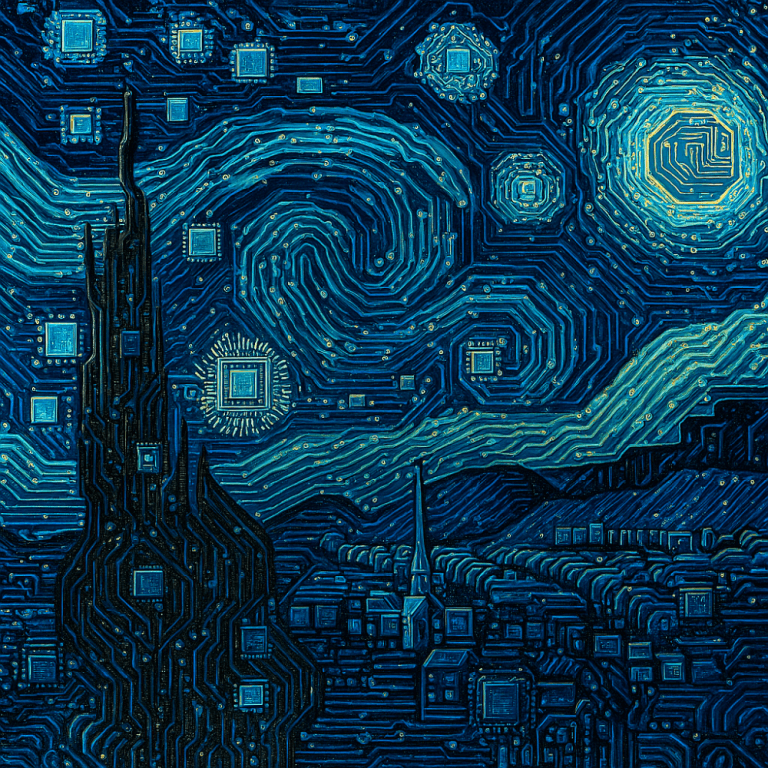
I recently experimented with this concept by fusing Vincent van Gogh’s Starry Night with printed circuit board (PCB) aesthetics and semiconductor elements, a tribute to both classical art and modern electronics. The journey was enlightening. While the AI helped execute the vision & the essence, the idea remained human. Technology did not replace creativity; it has made the process of transforming human imagination to tangible expressions even easier.
But this realization leads to deeper questions.
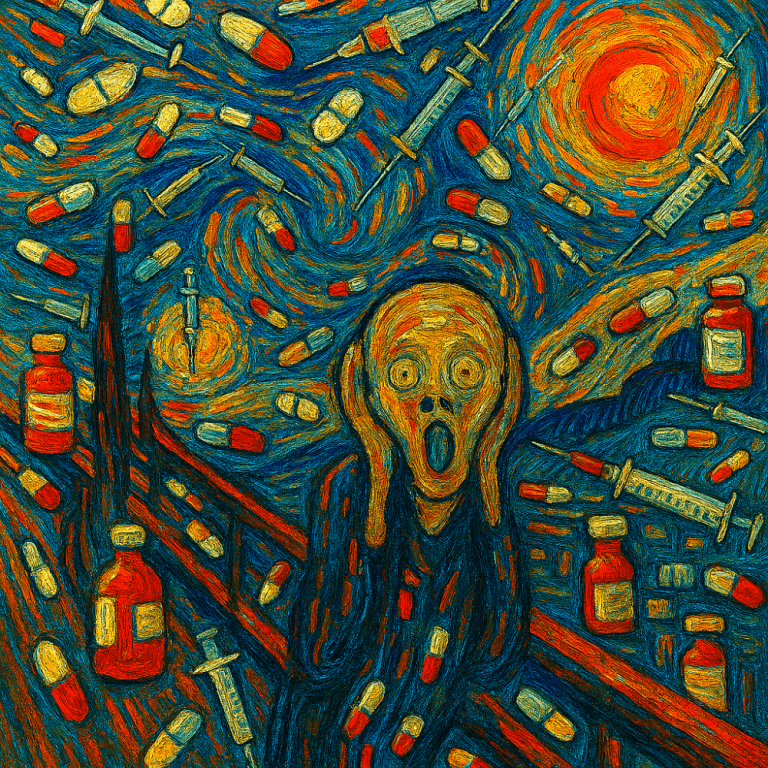
Art & Tech: A New Medium or an Empty Imitation?
Imagine a painting that shifts colors based on ambient sound. A sculpture that reacts to human presence. A neural network that generates art in the style of a master, evolving dynamically with user interactions. These are not futuristic dreams, they exist today.
- Generative Adversarial Networks (GANs) can now create paintings indistinguishable from human-made masterpieces.
- Neural style transfer algorithms allow anyone to “paint” like Van Gogh, Monet, or Picasso with a single click.
- E-ink displays and embedded electronics enable real-time interactive art, where digital canvases morph and respond to external stimuli.
These technologies expand the definition of art, yet they also challenge it. Hayao Miyazaki, the legendary animator behind Spirited Away, once criticized computer generated animation as “an insult to life itself.” His concern? That machine-made art lacks the soul, struggle, and imperfections that define human creativity.
But let’s consider the other side. Ray Kurzweil, futurist and AI researcher, predicts that art will evolve alongside technology. He argues that as our tools advance, so will our means of expression. Just as photography did not kill painting, AI-generated art does not necessarily kill creativity, it reshapes it.
Where does that leave us?
The Human Element: Who Owns Creativity?
If AI assists in crafting a masterpiece, is it still art? If a machine suggests brushstrokes based on deep learning patterns, does the human artist become a curator rather than a creator?
Consider this: a self-taught artist with no technical drawing skills can now translate their pure imagination into visual art using AI. Is this a revolution in accessibility, or does it diminish the value of traditional craftsmanship?
Perhaps the real question is not whether AI-generated art is valid, but how we, as humans, define creativity itself.
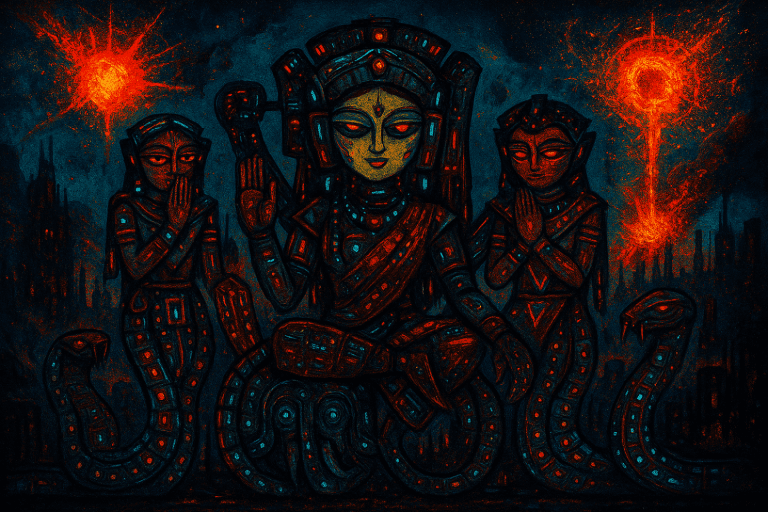
A New Renaissance or an Existential Crisis?
As technology blurs the boundaries between art and algorithm, we must ask:
- Is AI merely an advanced paintbrush, or is it the artist itself?
- If imagination fuels AI, does that make machine-generated art an extension of human creativity?
- Will future artists be those who master brushstrokes, or those who master algorithms?
Art has always evolved. Cave paintings led to Renaissance masterpieces, which led to digital design. Are we entering a new Renaissance or questioning the very soul of artistic expression?
I don’t have a definitive answer, and perhaps that’s the beauty of it. But one thing is certain: as long as humans dream, art will never die.
Would love to hear your thoughts. Are we witnessing the next great artistic movement, or are we losing something irreplaceable?
Original Artworks Reference:
https://en.wikipedia.org/wiki/The_Scream
https://en.wikipedia.org/wiki/The_Starry_Night
https://useum.org/artwork/Manasa-the-Snake-Goddess-Jamini-Roy-1920


 Total Users : 121
 Views Today :
 Total views : 800
 Your IP Address : 92.222.104.213